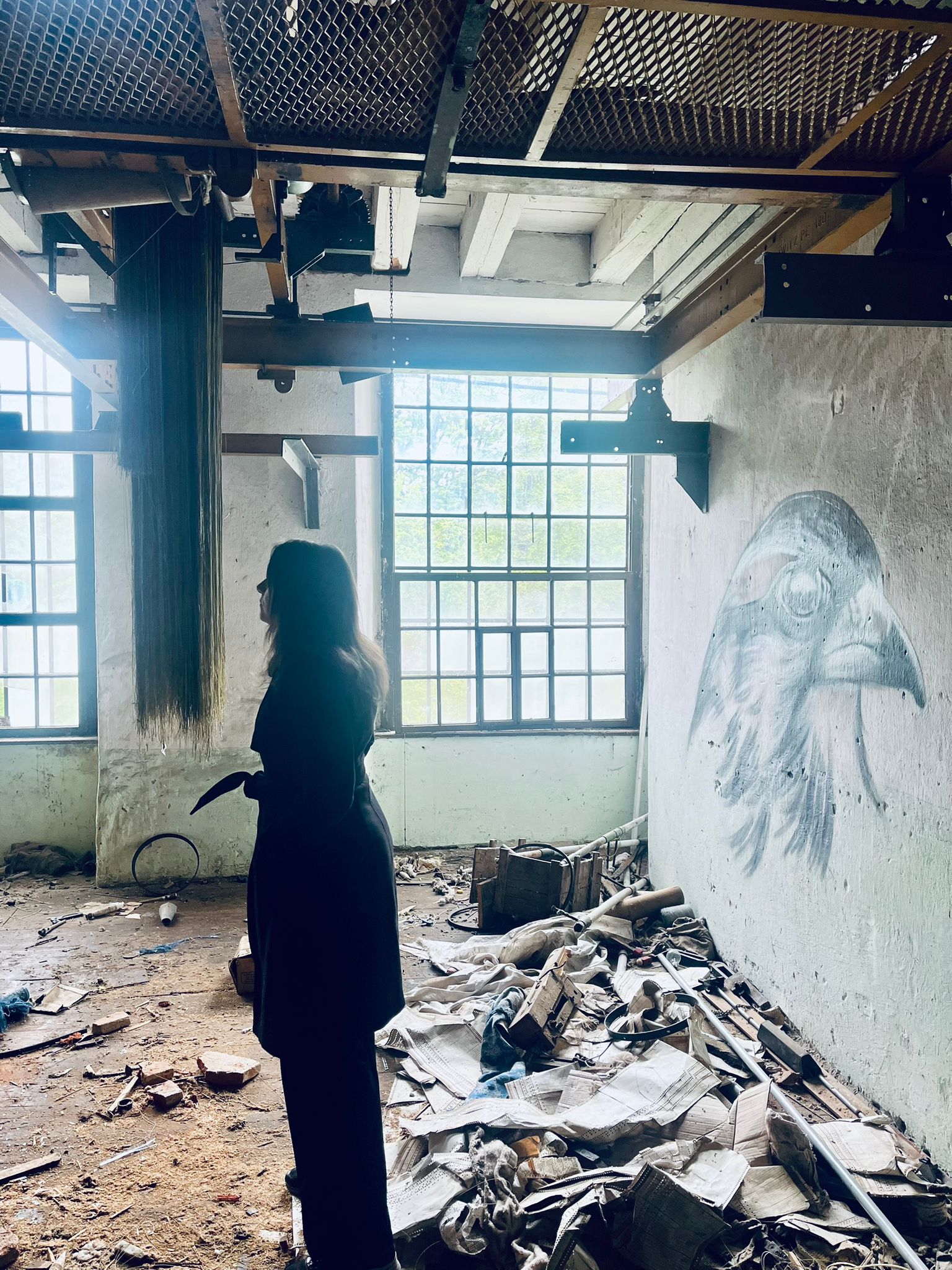
It is likely the patina of history that fascinates us about old buildings. It whispers to us a picture of society from days long past. It tells us of urban planning, ways of life, departure and settlement, error and memory, production logics, and power dynamics. The walls are shaped by a collective culture that, in a fluid era of rapid change, offers us an anchor in history. They are learned; they are understood. They are not timeless; they are full of time. And they are reservoirs of golden energy.
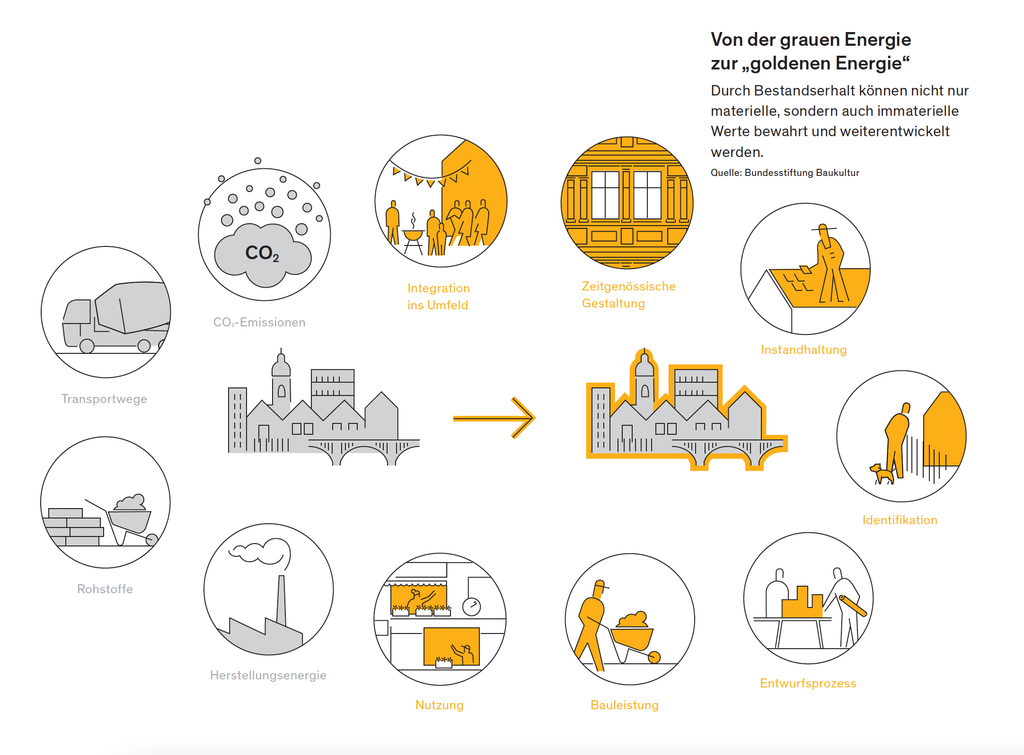
When a building of cultural significance is demolished, excavators and wrecking balls drag its entire history into the abyss of oblivion, insignificance, and nothingness. What we commonly call “golden energy”* is crushed. It describes the intangible and unquantifiable value of a building that arises from its history. Golden Energy is stored in the scars and furrows of history. That is precisely why it is a matter that concerns us all. History is made by humans, and so is destruction. Demolition can mean the exploitation of the future and the eradication of Golden Energy. For when the past and the present collide, the result is either a museum-like standstill—and thus preservation—complete destruction—and thus elimination—or conversion fueled by Golden Energy.
“The city is mine again”
Thanks, Fiva, for this beautiful line, which probably comes from one of the greatest breakup anthems—right up there with Gloria Gaynor’s “I Will Survive.” I came to think of it, though, because we should ask ourselves this question more often: “Who does the city belong to?” And to whom does its history belong? While “Golden Energy” may sound like naive sentimentality to some ears, it also lends itself to economic conclusions that cannot be dismissed. Gentrification took its course in exactly the same way, and no Excel spreadsheet would likely contradict this path to success. The recipe for success here, too, lies in an intrinsically motivated transformation that, at the outset, did not yet bear the evocative name of “Golden Energy.”
The transformation of the role of the past to meet current needs is also an ethical question. What dignity do we accord to history? Golden Energy is not a dogma, not an ideology, not a closed theory, and certainly not a burden. It is humus—a fertile ground that is enriched through growth, decay, and transformation.
On the Creed of Differentiation
Globalization has often brought us homogenization as well. “Golden Energy” breaks with this principle and follows the credo of differentiation. It emphasizes uniqueness, distinctiveness, significance, and emotional connection. In this sense, it can be unhesitatingly included among economic factors.
Furthermore, one might argue that buildings lose value through use. Golden Energy reverses this process: added value arises from living and loving, discussion and negotiation, appropriation and rejection. Especially since cities cannot be understood as rigid structures, buildings, too, must not be treated as if they were dead. They are living reflections of social visions. They stand with one foot firmly rooted in the certainty of history and support us amid the upheaval of the present.
Golden Energy thus shows us what we often forget in the real estate industry: namely, reality! History is past reality with deep and formative roots in the present reality. Smart adaptation takes this into account and finds ways to put it to good use. This isn’t just a nice-to-have; it’s a must for intelligent and contemporary urban planning. After all, the city and its history belong to all of us.
* Definition by the Federal Foundation for Building Culture at www.goldeneenergie.de: “The term ‘golden energy’ is intended to illustrate that existing buildings consist of more than just ‘gray energy’—more than just the building materials stored within them and the emissions they generate. For intangible, cultural values are also embedded in existing buildings. Every place and every building has its own history, which is interwoven with the life stories of the people who have lived, worked, learned, loved, played, and celebrated there. A new culture of renovation carries these life stories and histories forward and enriches them with new ones. The building itself often possesses characteristics specific to its era that provide inspiration for an exciting, contemporary design language. The Federal Foundation for Building Culture refers to this cultural, social, atmospheric, emotional, and design-related added value of existing building development as “golden energy.”


